Nutrition: Peace is made at the table…
“Peace Is Made at the Table –
The Mediterranean Diet as Cultural Heritage for Dialogue among the Peoples of Mare Nostrum”
Talk by Giorgio Bergamini on Biblical Breads,
on the occasion of the event promoted by Centro Meseuro and the association Pugliaeuropa.
Bari – Fiera del Levante – Saturday, September 18, 2010, 12:00 p.m. – Sala Olmo, Pavilion 10.
(Published with the kind permission of the author)
Originally, the theme of this meeting had been conceived as an opportunity to speak about peace, at least around the shared heritage of two gastronomic traditions—the Israeli and the Palestinian—on the margins of the resumption of peace talks between representatives of the two peoples, also taking into account their historic and fundamental contribution to the formation of the identity of the Mediterranean Diet.
Various difficulties, including the coincidence with the Jewish holiday of Yom Kippur, led to a refocusing of the event on the cultural significance of the Mediterranean Diet, which was then a finalist for recognition by UNESCO as Intangible Cultural Heritage of Humanity. Given the absence of contributions and expertise from the Jewish component, I was asked to speak about the ancient breads of this area of the Middle East, since bread remains, even today, the main element and symbol of the Mediterranean Diet.
Lacking specific expertise regarding contemporary Israeli and Palestinian cuisines, I attempted to reconstruct some examples of what bread might have been like in ancient Israel, particularly before the 2nd century CE, when a single identity existed there—the Jewish one—which also included the first Christians and their related food culture. Only later did the revealed religions become two, and later three with Islam, with the consolidation of different identities, cultures, and gastronomies, all originating from a common root—one that, unfortunately, did not prevent millennia of bloody conflict, which we all hope can finally be consigned to the past.
Despite the abundance of books on bread, I found no descriptions relating to this specific period. In order to remain within the scope of the topic, I therefore limited my research to the texts of the Old Testament, the New Testament, and one Apocryphal Gospel. Very little information emerged regarding specific types of bread, some of which, moreover, do not belong to any of the traditions of present-day Mediterranean populations. Nevertheless, all of them appear highly significant in terms of nutritional value, particularly with reference to the health principles that underpin a correct definition of the Mediterranean Diet.
This does not mean that references to bread in the Bible are scarce—on the contrary, they are numerous. For this, I refer to the excellent work by Predrag Matvejević in his recently published book Our Daily Bread (Pane Nostro), published by Garzanti, which nonetheless confirms the scarcity of detailed information in ancient scriptures regarding how the breads mentioned were actually made.
One interesting exception to this lack of information is found in the Old Testament, Ezekiel 4:9:
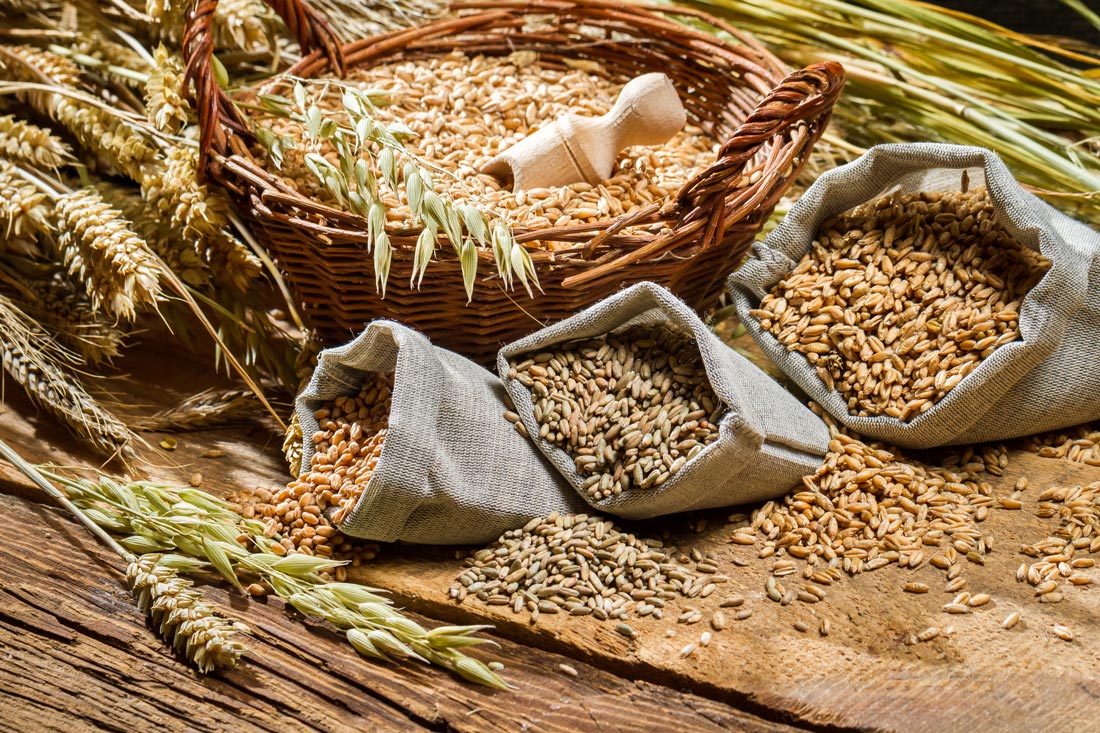
“Take wheat and barley, beans and lentils, millet and spelt; put them into one vessel and make bread of them.”
The recipe refers to the diet of the Jews during the siege of Jerusalem by Nebuchadnezzar in 588–587 BCE. It provides a precise list of ingredients, remarkable for their nutritional completeness—vital during a siege, when meat, fruit, vegetables, and even firewood quickly ran out.
However, Ezekiel does not explain how this bread was made. For that, we must turn to an Apocryphal Gospel, the Essene Gospel of Peace. Although its dating and authenticity are uncertain, it is associated with the papyri found near Qumran, close to the Dead Sea. There, in 70 CE, a monastic Essene community was exterminated by the Romans after hiding the scrolls of their library in nearby mountain caves. These scrolls, rediscovered after 1947, remain objects of scholarly study.
The document describes the germination of grains before bread-making, followed by leavening and baking either in the sun—shaped into thin sheets—or under sand, again using solar heat, forming loaves cooked for hours at low temperatures. It is worth noting that during germination, starches are transformed into simple sugars, which are easily digestible even when cooked at low temperatures, whereas humans cannot digest starches unless they are cooked at high temperatures. Low-temperature cooking also preserves the valuable vitamins in sprouts, while legumes provide important proteins, substituting for meat.
Confirmation that seed germination was already known in Ezekiel’s time comes from recent archaeological findings. According to the Roman archaeologist Carmen Russo, ancient tombs in Egypt and Mesopotamia contained funerary bread offerings with whole grains embedded within them. These grains, in my view, could only have been sprouted, though archaeologists had previously interpreted them as ritual elements. These were evidently special breads, considered nutritionally complete for the journey into the afterlife and reserved for the elite, since breads found in poorer tombs did not contain whole grains.
Turning to the New Testament, in Matthew 13:33, which speaks of leaven, we find another significant detail:
“The kingdom of heaven is like yeast that a woman took and mixed into three measures of flour until all of it was leavened.”
It is striking that this refers to sourdough fermentation rather than unleavened bread or brewer’s yeast, already known to the Sumerians. The proportions mentioned correspond to those used until relatively recently by traditional bakers in Puglia. This suggests that leavened bread was the norm and that unleavened bread became a stronger marker of Jewish identity only after the diaspora, later adopted—refined to extreme whiteness—by Catholicism for the Eucharist.
The degree of flour refinement has always been a marker of social class, as explored by Piero Camporesi in The Earth and the Moon (La Terra e la Luna). White bread was for the wealthy and the high clergy, considered purer, while dark bread was for the people, who were believed to have different physiological needs. This distinction persisted into modern times in southern Italy, where white bread was prepared only for the sick.
After World War II, however, white bread and brewer’s yeast became widespread throughout Italy, while wholemeal bread came to be associated with wartime hardship. Yet even during shortages, bread was made using recipes developed in the 17th century to feed the poor during famines.
Ancient sources, such as Petronius’ Satyricon, praise authentic wholemeal bread (panis cibarius) for its nutritional value. Today, however, finding genuine whole-grain bread is difficult, as many products are made from refined flour mixed with bran and leavened with brewer’s yeast, resulting in poor digestibility and health effects.
Returning to the Mediterranean Diet, Ancel Keys identified regions such as Crete and Cilento as having remarkably low rates of cardiovascular disease, leading him to define their dietary patterns as exemplary. However, these populations still consumed whole grains, not refined flours introduced later through American aid.
Subsequent research by Walter Willett of Harvard University demonstrated that refined carbohydrates and sugars—not fats—are the primary drivers of obesity and metabolic disease. He advocated a return to whole grains, legumes, olive oil, and physical activity, placing refined carbohydrates and sugars at the top of the food pyramid to be minimized.
In Puglia, traditional cuisine once embodied these principles perfectly: whole grains, legumes instead of meat, olive oil as the sole fat, and intense physical labor. Today, however, obesity rates have soared, even surpassing national averages, highlighting the urgent need to reinterpret and restore the true Mediterranean Diet.
In conclusion, ancient breads—such as Ezekiel’s bread, Essene bread, and other whole-grain, sprouted-grain breads mentioned in biblical texts—offer valuable insight into a nutritionally sound and culturally meaningful dietary model. These breads were made from ancient grains with healthy gluten profiles, in stark contrast to modern hybridized wheat varieties.
To give tangible form to these ideas, baker Beppe Concordia of Panificio Adriatico recreated these ancient breads using organic, stone-ground ancient grains grown in Puglia, including spelt, saragolla, barley, emmer, and Senatore Cappelli wheat. The breads prepared included Ezekiel bread, Essene bread, whole-grain leavened breads inspired by the Gospel of Matthew and Roman panis cibarius, John the Baptist’s carob bread, and Petra bread, flavored with pink pepper, attributed to Nabataean tradition—thus reviving, through taste, these living archaeologies.
Read more
Read less
Insights: Other Sections